What Are V-Rings and V-Seals?
What Are V-Rings and V-Seals?
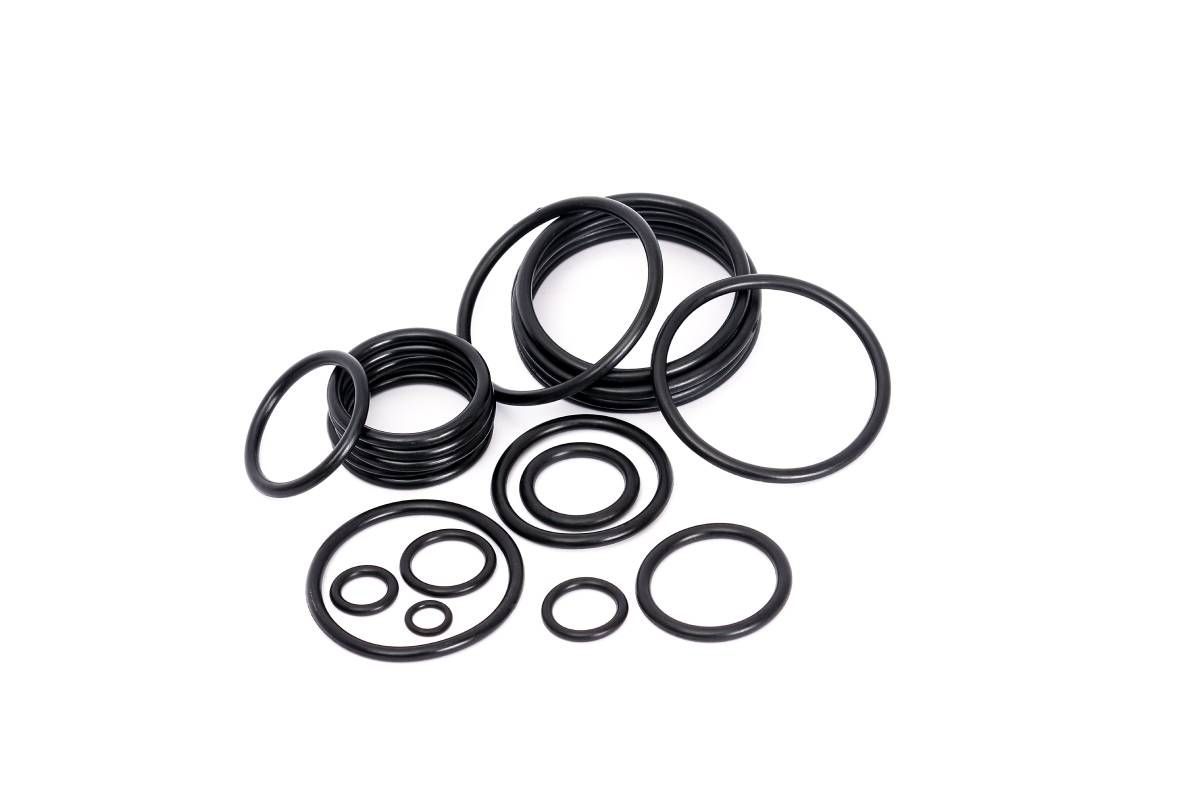
O-rings are one of our most commonly used gaskets, but other categories also deserve your attention. Take V-rings and V-seals, for example. The experts at I.B. Moore Manufacturing recommend these specialized sealing components to address challenges that conventional O-rings cannot solve. The distinctive geometry makes these seals invaluable for applications where space constraints, installation methods, or operational requirements demand an alternative approach.
The Basics of V-Ring Design
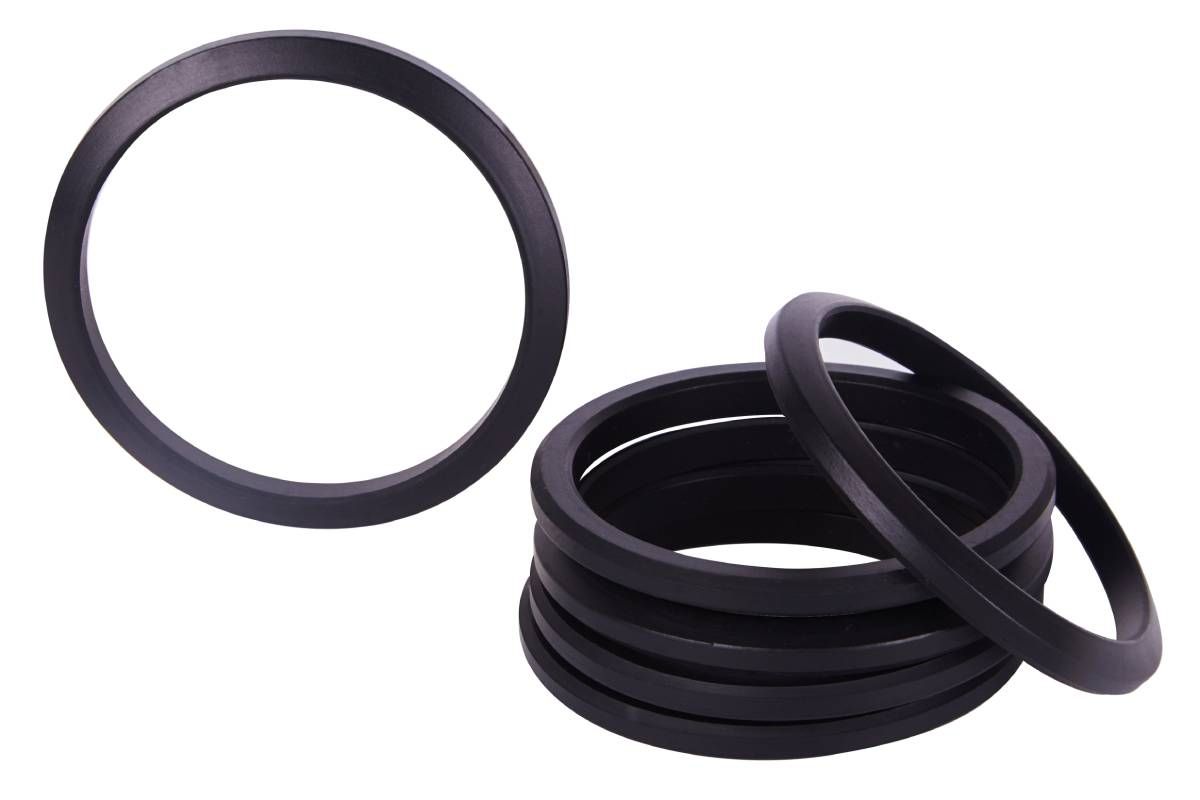
Compared to standard O-rings with round profiles, a V-ring has a cross-section shaped like the letter “V.” A V-ring seals by wedging outward against the surfaces (radially), rather than being squashed flat from above (axially). The angled sides of the “V” push outward to create the sealing pressure.
V-rings work well in grooves that are too shallow or narrow for conventional O-rings. Think of it like a doorstop: It wedges out against the floor and door, instead of being compressed from the top. The angled surfaces guide the seal into place during installation, eliminating the need for the exact compression ratios that O-rings require. That design makes them more forgiving during assembly and less prone to damage during installation.
Applications Where V-Seals Excel
V-seals work particularly well on rotating shafts. As the shaft spins faster, centrifugal force actually helps the seal maintain contact with the surface; there’s no need for extra spring pressure. That makes them a natural fit for pumps, motors, and other rotating equipment.
They’re also valuable for static applications, especially when space is tight. Sometimes you can’t machine a groove deep enough for a standard O-ring to compress properly. V-seals require less depth to create an effective seal, which is beneficial when working with thin-walled parts that need to remain structurally sound.
The wedge shape also handles angled or tapered surfaces better than O-rings. While O-rings need parallel, flat surfaces to seal correctly, V-seals can adapt to slight angles without compromising their effectiveness. That gives designers more flexibility and simplifies the machining process.
Industries That Rely on V-Seals
Automotive manufacturers extensively utilize V-seals in transmissions, axles, and engine components, where space constraints and rotating shafts are common. The seals effectively resist exposure to oils, fuels, and varying temperatures.
Industrial equipment sectors, including agriculture, construction, and material handling, depend on V-seals for hydraulic cylinders and gearboxes. A V-ring’s durability in harsh environments and ability to seal in compact spaces make them essential for applications involving heavy machinery.
Material Selection and Performance Considerations
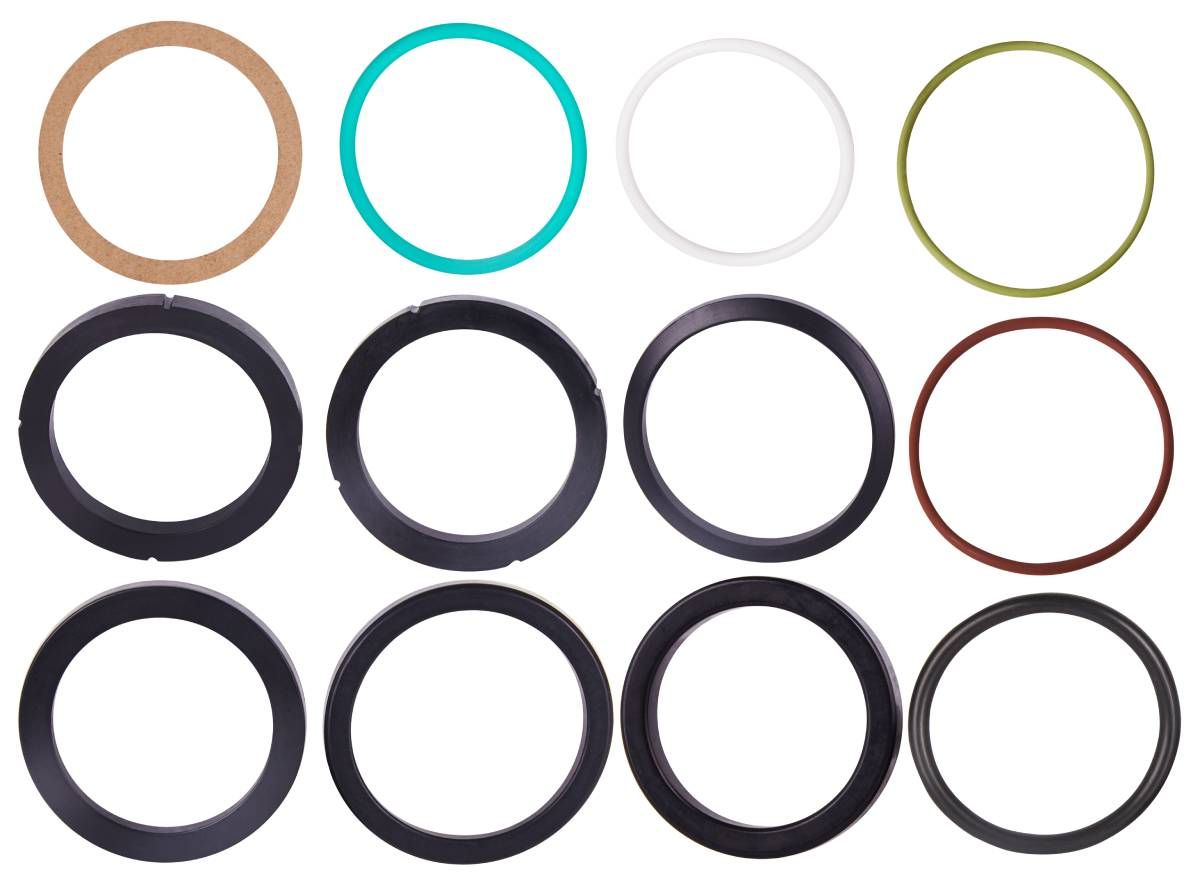
Our custom sealing kits can include V-rings made from various gasket materials, selected to suit your specific conditions. For instance:
- Nitrile rubber handles petroleum-based fluids effectively and is suitable for most general applications at a reasonable cost.
- Silicone compounds stay flexible across extreme temperatures while maintaining their seal.
- EPDM (Ethylene Propylene Diene Monomer) withstands water, steam, and many acids and alkalis, making it the preferred choice for outdoor applications and water-based systems.
The sealing pressure is determined by how tightly the V-ring fits against its mating surface, combined with the material’s hardness. If the fit is too loose, you’ll get leaks; when it’s too tight, the seal wears out quickly and creates unnecessary drag. Our team sizes these seals correctly, so they don’t cause excessive friction.
Design Guidelines for V-Ring Implementation
Proper V-ring installation starts with the right surface finish. The sealing face should be smooth to prevent leaks; sharp edges or tool marks can cut the seal during rotation or create paths for fluid to escape.
Adding a chamfer (a slight, angled edge) makes installation easier and protects the seal. That edge allows the V-seal to slide into place without rolling or tearing — a simple detail that enhances reliability during assembly and prolongs the seal’s lifespan.
One final note: Temperature changes impact how V-rings perform, causing the materials to expand and contract. You need to factor in thermal growth when sizing the seal and setting clearance. Our custom sealing kits are available in multiple sizes to accommodate different temperature conditions across various operating environments.
We Invite You to Partner With Our Sealing Experts
I.B. Moore Manufacturing develops custom sealing ring kits tailored to specific application requirements; we also offer standard kits. Just as importantly, our team provides technical support throughout the design process and will help you select the optimal gasket configurations, materials, and dimensions to achieve reliable performance. Contact our Lexington, KY, team for nationwide service.